Booking a lodge vs resort stay trips up more travelers than you might think, and it often costs them money. The two words get used interchangeably on booking sites, so people end up paying resort prices for a simple lodge room, or booking a resort expecting an intimate wilderness escape and finding a sprawling complex instead. Understanding the real differences before you click “reserve” saves both your budget and your trip.
The distinctions go well beyond size. Lodges typically house 10-50 guests and lean into their natural setting, while resorts accommodate 200-1,000+ with pools, multiple restaurants, and entertainment built in. That shapes everything from where they’re located to how far in advance you should book. In this guide, we’ll break down size and atmosphere, location and setting, dining and food options, activities and facilities, plus price, booking lead time and value. We’ll finish with a clear framework for deciding which one fits your next trip.
Lodge vs Resort: Size and Atmosphere
The most immediate difference between a lodge and a resort hits you the moment you arrive: scale. Lodges are small, intimate properties that typically house somewhere between 10 and 50 guests. That limited capacity shapes everything, from the wood-and-stone architecture to the way staff greet you by name after your first day. The design usually leans rustic or nature-focused, with common areas like fireplaces, verandas and shared lounges that encourage conversation with other guests.
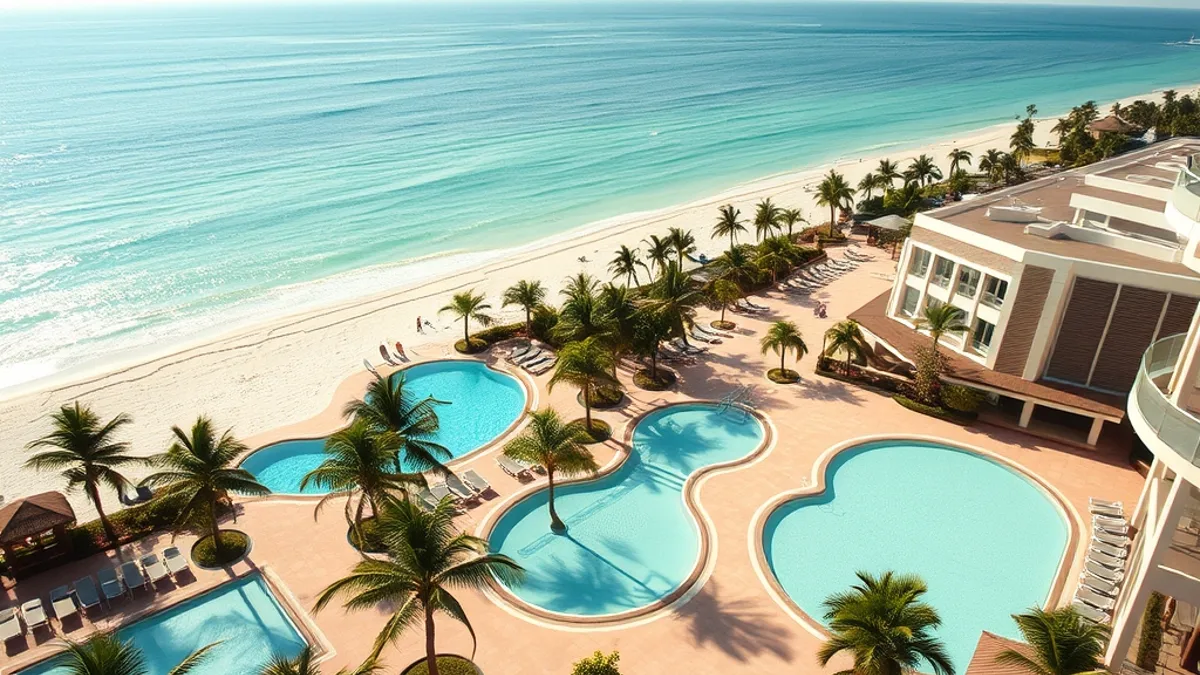
Resorts are built for volume. These large complexes commonly accommodate anywhere from 200 to well over 1,000 guests, spread across multiple buildings, wings or rows of standalone rooms. You will often find several pools, wide walkways, elevators and signage directing you between zones. The atmosphere is more hotel-like by design: efficient, polished and built to handle hundreds of people at once without anyone feeling crowded.
What the Atmosphere Feels Like
At a lodge, service tends to be quiet and personalized. With fewer guests to look after, staff often remember your preferences, adjust activities around your interests and chat with you at dinner. Expect calm evenings and a pace set by the natural surroundings rather than a schedule of entertainment.
Resorts offer the opposite trade-off. You can be as anonymous or as social as you like, and the shared spaces hum with activity: poolside games, live music, groups of friends and families meeting up. If you recharge around people and enjoy a lively social scene, that energy is a genuine plus. If you are after silence and a sense of escape, the smaller footprint of a lodge usually wins.
Location and Setting
Location is one of the clearest dividing lines between lodges and resorts, and it shapes almost everything else about your stay. Lodges are typically set in remote natural areas — think forests, mountains, savannas or lakeshores — where the whole point is the landscape around you. That isolation is intentional, but it comes with a practical trade-off: lodges are often 30+ minutes from the nearest town, so popping out for dinner, an ATM or a forgotten charger usually isn’t an option.
Resorts, by contrast, cluster near the action. They’re commonly built along beaches, marinas or town centers, and many sit within 1-2 km of a beach or town center. That means you can often walk to shops, cafés, boat excursions or a local market without needing a car, a shuttle or a pre-arranged transfer.
How to match the setting to your trip
Ask yourself what you want to see when you step outside your room. If the answer is wildlife, silence and dark night skies, a lodge delivers that immersion in a way a beachfront resort can’t. If the answer is convenience — morning swims, afternoon shopping, dinner in town without planning ahead — a resort’s location will serve you better.
Also think about logistics. A remote lodge usually means longer transfers from the airport and less flexibility to leave the property once you arrive, so pack accordingly and confirm transfer arrangements with your operator before booking. A resort near town gives you the freedom to change plans on a whim, which families and first-time travelers often appreciate. Neither setting is better in absolute terms; the right one depends entirely on whether you’re chasing nature or walkable access.
Dining and Food Options
Dining sets lodges and resorts apart more sharply than almost anything else. A resort functions like a small dining district: most large properties run somewhere between three and six venues, so you can eat at a different restaurant every night of a week-long stay. Expect a mix of formats — a breakfast and dinner buffet, a poolside grill for lunch, and one or two à la carte specialty restaurants such as Italian, seafood or a steakhouse, often requiring a reservation.
Lodges work differently. Because they host a small number of guests, they typically operate a single restaurant with a fixed or limited menu that changes daily. Meals are often served at set times, and in many lodges — especially safari and wilderness properties — guests share a communal table, which turns dinner into part of the experience rather than just a meal. If you have dietary restrictions, tell the lodge when you book; with one kitchen and a set menu, they need advance notice to accommodate you.
Cost structure differs too. All-inclusive resort packages generally run 30-50% above room-only rates, but they cover most meals and drinks, which makes budgeting simple. At a lodge, meals are usually bundled into the nightly rate or the activity package, so check what is included before comparing prices.
A few practical points to weigh when comparing the two:
- Venue variety: At a resort, you can rotate between buffet, grill and specialty restaurants across multiple nights, which suits travelers who dislike eating the same menu twice.
- Menu flexibility: Lodge kitchens cook for everyone at once, so choices are limited each day — but ingredients are often fresher and menus change daily rather than repeating a static resort lineup.
- Reservation logistics: Resort specialty restaurants often fill up fast, so book them on arrival day; lodge dinners rarely need reservations since seating is communal and fixed.
- Drinks and snacks: All-inclusive resort rates typically cover cocktails, soft drinks and poolside snacks, while lodge packages may only include meals — ask whether drinks, sundowners and packed lunch for excursions are extra.
Activities and Facilities
Activities are where the two property types really split. A resort is built around a long menu of on-site facilities: swimming pools, a spa, a fitness center, a kids’ club, water sports equipment and scheduled evening entertainment. Much of it is self-serve — you grab a towel, pick a lounger and fill your day however you like, with most activities included in your stay.
A lodge takes the opposite approach. The surrounding environment is the main attraction, so activities center on guided experiences: wildlife drives at dawn, guided hikes, fishing trips or canoe excursions. You typically book these at the front desk or with the lodge’s activity coordinator, often a day ahead, and they’re led by staff or local guides who know the area well.
That difference shapes the rhythm of your trip. At a resort, you decide minute by minute; at a lodge, the day usually follows a set schedule built around weather, wildlife and daylight. Neither is better — it depends on whether you want variety at your fingertips or expert-led time outdoors.
- Equipment quality varies: resort kayaks, snorkel gear and paddleboards are often included free, while premium options like scuba diving or jet ski rentals usually carry an extra charge — ask for the activities price list at check-in.
- Guide ratios matter at lodges: on safari-style properties, game drives commonly run with a professional guide per vehicle, so group size is small — a good question to ask before booking is how many guests share each vehicle or hike.
- Kids’ facilities differ sharply: many resorts run supervised kids’ clubs with set hours, which can be a deciding factor for families, while lodges often welcome children but rarely provide dedicated childcare — confirm age policies directly.
- Weather can cancel lodge activities: guided hikes and canoe trips depend on conditions, so build a buffer day into a lodge itinerary rather than planning every outing back-to-back.
Price, Booking Lead Time and Value
Price is often the deciding factor, and the two property types play by different rules. Lodge nightly rates typically range from $150 to $600, reflecting their smaller scale and remote locations. Resort rates span roughly $200 to $1,500+ depending on star level, which means resorts can be either cheaper or far more expensive than a lodge, depending on what you pick.
Booking lead time matters more for lodges
Because lodges have limited rooms, peak season demand fills them fast. For a June-August stay, plan on booking 6-12 months in advance to secure your dates, especially at popular properties. If you wait until a few weeks out, you may find nothing available or only the least desirable rooms left.
Resorts, with their much larger inventory, are more forgiving. Last-minute deals are common, and you can often book a week or two ahead and still find availability. The trade-off is that the advertised room rate rarely tells the whole story. Spa treatments, premium dining venues, motorized water sports and other add-ons can inflate your final bill significantly, sometimes doubling what you expected to spend.
To compare value fairly, look beyond the nightly rate. A lodge rate often includes guided activities and full board, while a resort’s base rate may not. Ask what’s included before booking, then estimate your likely add-on spending at a resort to see which option actually costs less for the trip you have in mind.
Which Should You Book?
So, which one should you book? Start with the kind of trip you actually want, not the one you think you should want. If your dream involves waking up to birdsong, spending the day on guided nature excursions and trading a long dinner menu for a genuinely personal welcome, a lodge fits. If you picture a week where nobody in the family ever gets bored — pools in the morning, kids’ club in the afternoon, a different restaurant each night — a resort is the safer bet.
Trip length matters more than most travelers expect. Lodges work beautifully for short, focused stays of two to four nights, because their single restaurant and limited on-site options stay charming rather than restrictive over a long weekend. Stretch that to a week and many guests start craving variety. Resorts, on the other hand, are built for week-long leisure trips: enough dining venues, facilities and activities to fill seven days without leaving the property.
Budget style is the other deciding factor. At a lodge, you pay a nightly rate and then add guided activities and extras as you go, which suits travelers who like itemized control. At an all-inclusive resort, most meals, drinks and entertainment are bundled into one predictable price, which makes family budgeting far easier — you know the number before you arrive, even if it’s a higher one.
- Book a lodge if you value expertise over amenities. The staff at a small nature lodge often know the surrounding trails and wildlife intimately, so your game drives and hikes tend to be more tailored than anything a large resort’s general activities desk can arrange.
- Book a resort if you’re traveling with mixed ages. Toddlers, teenagers and grandparents can each find their own pace on one property, from splash areas and kids’ clubs to spas and quiet pool decks, without anyone needing a car.
- Book a lodge for a milestone or romantic escape. The intimate scale and quiet setting suit couples celebrating something specific, where a crowded pool deck and buffet lines would work against the mood.
- Book a resort if you want a fallback for bad weather. With indoor dining variety, spas, gyms and entertainment under one roof, a rainy day doesn’t derail the trip the way it can at a remote lodge.
- Match the choice to how far you’ll venture out. If sightseeing, shopping and town excursions are the point of your trip, a resort’s walkable base near the action saves daily logistics; if the property itself is the destination, the lodge wins.
Final Takeaway
The confusion between lodges and resorts is what leads travelers to pay resort prices for a lodge stay, or book a lodge expecting resort-style amenities. The two are simply built for different trips. Lodges are small, remote and nature-driven, while resorts are large, amenity-rich and close to the action.
Before you book, weigh the five key differences: size, dining, activities, price range and booking lead time. Matching those to the trip you actually want is the surest way to avoid paying the wrong rate for the wrong experience. If this helped you sort out the difference, leave a comment or share the article with a fellow traveler.