You’ve found three glamping options at the same campsite, all priced within the same range, and the photos look equally tempting. That’s exactly the problem with the yurt vs safari tent vs dome decision: these structures cost similar amounts per night but deliver completely different experiences. Pick the wrong one and a stay you paid hundreds of euros for can turn into a sweaty, sleepless disappointment.
The differences come down to structure, comfort and weather. A yurt is a round tent inspired by Central Asian nomadic dwellings, a safari tent is a large canvas lodge built for warm, dry conditions, and a dome is a curved structure that, in many regions, can be booked year-round thanks to insulated panels or wood stoves. This guide compares what each structure actually is, the comfort and amenities you can expect, when each stay type works best seasonally, what you get for your money, and how to book peak-season dates between May and September. We’ll finish with a straightforward look at which glamping stay fits your travel style.
What Each Structure Actually Is
Before comparing comfort, prices or seasons, it helps to know what you’re actually sleeping in. These three structures look similar in photos but are built very differently, and those differences explain most of what follows.
The yurt: a circular classic from Central Asia
A yurt is a round tent with roots in the nomadic cultures of Central Asia, where it has sheltered herders on the steppe for centuries. The modern glamping version keeps the basic design: a wooden lattice wall that expands like an accordion, curved roof poles, and a felt or canvas cover stretched over the frame. Most yurts you can book range from roughly 25 to 70 square meters, which makes them noticeably roomy compared to a standard hotel room.
The shape matters more than you might expect. A circular floor has no corners to furnish around, and a central skylight at the crown of the roof lets in daylight and, on clear nights, a view of the stars from your bed. The atmosphere is warm and organic, with wooden ribs visible overhead.
The safari tent and the geodesic dome
A safari tent is essentially a large rectangular canvas lodge on a fixed frame, inspired by the canvas camps of African hunting safaris. Because it stands on a rigid structure rather than flexible poles, the walls stay taut and the interior can be arranged like a small apartment, often with a covered veranda across the front where you can sit and watch the evening go by.
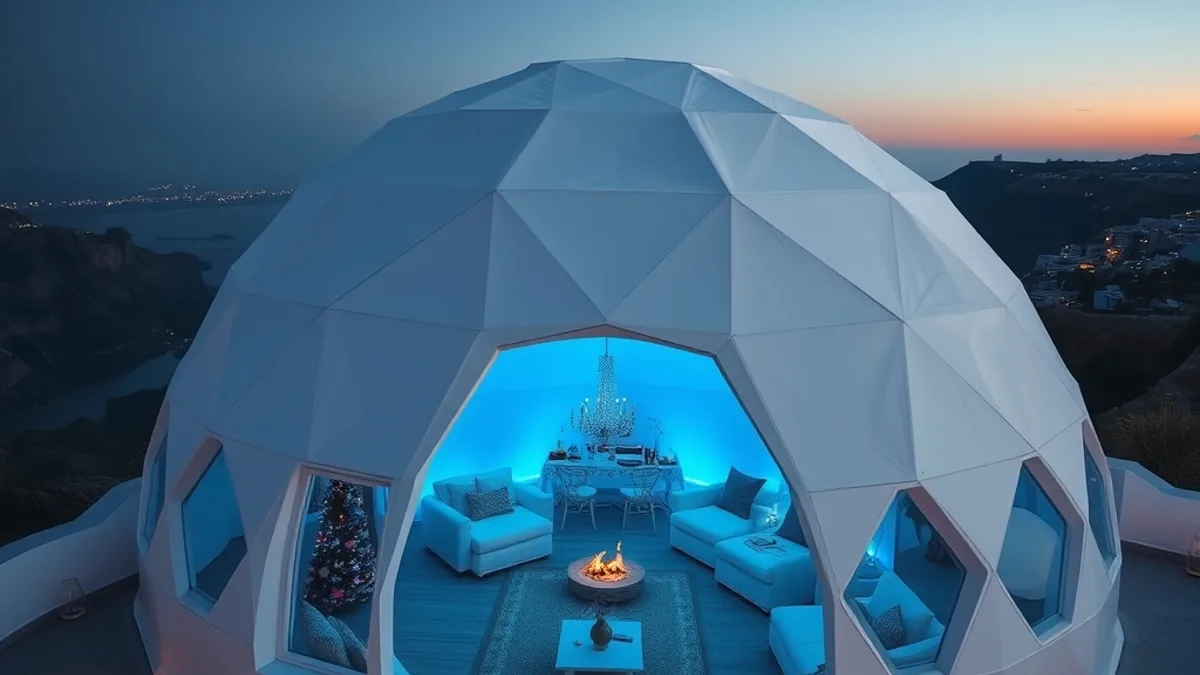
A geodesic dome is the newcomer of the three. It is a spherical structure built from triangular panels locked together, typically spanning 20 to 50 square meters. The geometry makes it remarkably strong for its weight, and it lends itself to large panoramic windows that frame the landscape. The look is unmistakably futuristic, which is part of why domes dominate glamping photos on social media.
In short: the yurt is round and traditional, the safari tent is rectangular and outdoors-oriented, and the dome is spherical and modern. Everything else, from insulation to bathroom setups, flows from those basic designs.
Comfort and Amenities Compared
When it comes to day-to-day comfort, the three structures behave more like three different tiers of accommodation than three variations of the same idea. A safari tent is essentially a furnished apartment made of canvas: you typically get proper beds with real mattresses, a small kitchenette for morning coffee and simple meals, and a covered veranda with chairs or a lounge set where you can sit out the evening. The layout is horizontal and room-like, with partitions separating sleeping areas from the living space.
Domes tend to sit at the top of the comfort ladder. Because they are built on rigid platforms with engineered panels, operators more often equip them with private en-suite bathrooms and proper heating, which makes the experience feel closer to a boutique hotel room with an unusual shape than to camping. Many also add features you would rarely find in a tent, such as floor heating, blackout blinds over the panoramic windows, or a small fridge and kettle setup.
Yurts are the most rustic of the three, and that is part of their charm. Expect a simpler interior with a central stove or basic heating, furniture kept to essentials, and, at many sites, a shared bathroom block a short walk from your yurt rather than plumbing inside. Check the listing carefully if an en-suite bathroom matters to you, because setups vary a lot between operators.
- Bedding quality differs more than you might expect: safari tents and domes usually have fixed beds made up on arrival, while some yurt sites still ask you to bring or rent linens, so read the fine print before packing.
- Lighting and power vary widely: domes often have full wiring and reading lamps, safari tents typically run on solar power with limited outlets, and some yurts offer only battery lanterns and a charging point in the communal area.
- Kitchen access is not a given: if your yurt or dome has no cooking setup, many glamping sites provide a shared communal kitchen, which can be a pleasant way to meet other travelers.
- Hot water is the real dividing line: private bathrooms in domes mean instant hot showers, while shared facilities at yurt and safari tent sites can mean timed or coin-operated showers during busy periods.
Seasonality and Weather: When Each Stay Type Works
Why the season matters more than the structure
Glamping feels very different depending on when you go, and each of the three stay types has a clear comfort window. Safari tents are at their best from May to September, when warm days and mild nights match their design. The thin canvas walls that make them so airy in summer offer little insulation, so spring and autumn nights can feel genuinely cold inside, even with a blanket pile on the bed.
Yurts handle temperature swings noticeably better. The combination of a solid frame, felt or layered canvas walls and a smaller volume of air to heat means they hold warmth longer after sunset. In practice, many yurt sites open earlier and close later than safari tent camps, often extending the usable season into April and October. If you are dreaming of a shoulder-season trip but still want to sleep warm, a yurt is usually the safer bet.
The year-round option
Domes are the only one of the three that is reliably bookable in every month. Models built with insulated panels or fitted with a wood stove can be found year-round in many regions, including snowy winter landscapes where the other two structures would be impractical. That said, not every dome is winter-ready, so check whether a specific site advertises cold-season stays before you assume it does.
A simple rule of thumb: match the structure to your dates. Summer travelers can pick any of the three, April and October travelers should lean toward yurts, and anyone chasing a winter escape should focus on insulated domes and confirm the heating setup directly with the operator.
Price Ranges and What You Get for Your Money
Glamping pricing is refreshingly consistent across all three structure types. In high season, yurts, safari tents and domes typically cluster in the €120–€350 per night range, which means the choice between them is rarely about finding the cheapest category. Instead, it is about where a specific site sits within that band and what it includes at each level.
Where each structure earns its price
Domes command the top of the range, especially when they come with a private bathroom and panoramic views. Sites know that a curved window framing a valley at sunrise is a selling point, and rates reflect it. If you see a dome priced near the upper end of the band, it usually includes the most hotel-like setup on offer.
Yurts generally deliver the most floor space per euro. Their generous circular layouts often cost less than a smaller dome at the same site, making them the value pick if square meters matter to you. The trade-off is usually a simpler level of finish rather than a lower quality of stay.
Safari tents sit somewhere in the middle, but they charge a premium for the extras that make them feel like a summer cottage: a kitchen and a covered veranda. You are paying for outdoor living, not just a bed.
Whatever the structure, always check what the rate actually covers. Some sites bundle linens, wood for the stove or final cleaning into the price, while others add these as extras that can shift the total noticeably.
Booking Timing and How to Secure Peak-Season Dates
Glamping sites are small by nature—many have fewer than a dozen units—so the best dates disappear fast. Unlike a large hotel with hundreds of rooms, a site with eight safari tents simply cannot absorb a wave of last-minute bookings. If you have your heart set on a specific structure, view or week, timing your booking matters as much as choosing the stay itself. Here is a simple process to follow.
- Mark your calendar for a 3–6 month head start on July and August. These are the busiest weeks of the peak season, and popular sites can fill their units within days of opening reservations. Set a reminder to book as soon as your window opens, and sign up for the site’s newsletter if they announce release dates. A quick email to the operator asking when next summer’s calendar goes live can also pay off.
- Target May, June or September for better availability and softer rates. These shoulder months fall within the European glamping season but see noticeably less demand. You’ll typically find more open units to choose from, and some operators adjust pricing downward when occupancy is lighter. Weather is often still pleasant, especially in June and early September, so you lose little in exchange for the easier booking.
- Book winter dome stays around the holidays especially early. A dome with insulated panels or a wood stove is one of the few glamping options that runs year-round, and festive-season dates—Christmas, New Year, school breaks—sell out quickly. Reserve these as soon as the operator opens the calendar, sometimes well over six months ahead.
- Stay flexible on exact dates if you can. Shifting a trip by even a few days can open up availability at fully booked sites, particularly midweek versus weekend nights. If a site shows no openings, ask about cancellations—small operators often keep a waiting list.
One last practical tip: read the cancellation policy before paying in full. Many glamping operators use stricter terms than standard hotels, since a canceled booking leaves an entire unit empty rather than just one room among many. A flexible rate or travel insurance can protect your plans if weather or schedules change, and it costs far less than losing a full prepayment on a week you can no longer take.
Which Glamping Stay Fits Your Travel Style
Picking between these three comes down to how you like to spend your days on holiday. If your ideal trip involves cooking breakfast outside, reading on a covered veranda and living as much as possible in the open air, a safari tent is built for exactly that. Its layout works best in warm, dry weather, so it shines at the height of the European summer.
If you care more about room to spread out than fancy fittings, a yurt makes strong sense. The circular floor plan feels surprisingly generous, the atmosphere is cozy and characterful, and rates often sit at the friendlier end of the spectrum. Because the felt and canvas walls hold warmth better than thin canvas, yurts also tend to be bookable a bit earlier and later in the season than safari tents.
A dome is the pick for travelers who want the experience to feel closer to a boutique hotel. Private bathrooms, solid insulation and heating mean you can plan a cold-season escape without worrying about shivering through the night. The panoramic window becomes your entertainment, especially when there is frost or snow outside.
- Safari tent travelers: pack for the veranda lifestyle — a headlamp for evening trips to the shared bathroom block and citronella candles make warm nights far more pleasant.
- Yurt travelers: ask whether bedding and towels are included, since some simpler sites expect you to bring sleeping bag liners or rent linens on arrival.
- Dome travelers: check the window orientation before booking; a dome facing west gives you sunset views, while one facing east means early morning light through the panoramic panel.
- Mixed groups: some glamping sites let you combine types, so a couple can take a dome while friends book a yurt on the same property.
Wrapping Up the Yurt vs Safari Tent vs Dome Decision
So which one wins? The honest answer is that none of them does across the board. Yurts give you the most space and value for your money, safari tents deliver that classic summer outdoor-living feel with a kitchen and veranda, and domes offer the closest thing to a hotel room, including year-round availability with heating. At similar prices, the structure itself is what you are really choosing.
Three factors separate them in practice: when you travel, what bathroom setup you expect, and how the €120–€350 per night range maps onto what each structure includes. Get those three clear in your head before booking, and picking between them becomes genuinely straightforward rather than a gamble on a trip that cost hundreds of euros. If this helped you decide, leave a comment or share the article with a fellow traveler.