Choosing a safari lodge can feel overwhelming. With hundreds of camps across Africa charging anywhere from $300 to $2,000 per night, how do you know which one actually fits your budget, your travel dates and the wildlife you most want to see? The truth is that the “best” lodge depends entirely on you: a small tented camp in a private concession suits some travelers, while a larger lodge with more amenities suits others. This guide walks you through the decisions that matter, from defining your safari style and matching the season to your lodge, to understanding camp size, what the nightly rate should include and how far ahead to book.
We’ll also flag the red flags to check before you pay a deposit, and finish with a simple checklist you can use at a glance. Whether you’re eyeing the Great Migration river crossings between July and September or hunting for green season value from November to March, you’ll finish this guide knowing exactly how to compare options and book a safari lodge with confidence.
Define Your Safari Style Before You Compare Lodges
Before you fall in love with a lodge photo, work out what kind of safari you actually want. The three main styles are classic vehicle-based game drives, walking safaris with an armed guide, and water-based trips by mokoro canoe or boat. Not every camp offers all three, and assuming otherwise is one of the most common booking mistakes. A camp in the Okavango Delta might excel at mokoro excursions but offer limited walking, while a reserve in South Africa’s Kruger area is typically built around game drives with walking as an optional extra.
Be honest with yourself here. If you want close-up photography of predators, a vehicle-based safari is hard to beat. If you want to feel the bush under your feet and track animals on foot, prioritize camps where walking is a core activity, not a token morning stroll. Water-based safaris suit travelers who prefer a slower pace and excellent birdlife and hippo viewing, though big game sightings can be less predictable than from a vehicle.
Set your budget band first
Decide your per-person nightly budget before you browse, because safari pricing varies enormously. As a rough guide, budget camps run around $150–$400 per person per night, mid-range sits at $400–$750, and luxury camps start at $750 and can climb past $2,000. Knowing your band immediately narrows the field and stops you wasting time on camps you cannot afford or underspending on one you could.
Choose your priority wildlife
Your target animals dictate the region, and the region dictates the lodge. If the Big Five is the goal, South Africa and Kenya offer strong options. If you dream of the Great Migration, you will be looking at the Serengeti and Masai Mara, with river crossings roughly July to September. Gorilla trekking is a separate add-on centered on Uganda and Rwanda, usually combined with a conventional safari rather than replacing it. Fix this priority first, then start shortlisting lodges that fit your style and budget within that region.
Match the Season to Your Safari Lodge Choice
Timing shapes your safari more than almost any other booking decision. In East Africa, plan for the dry season from June to October, when vegetation thins out and animals gather predictably around rivers and waterholes. Southern Africa follows a similar pattern, with the dry season typically running from May to October. During these months, game viewing is at its best and you will spend less time searching for wildlife.
Chasing the Great Migration river crossings
If your heart is set on seeing wildebeest thunder across the Mara River, target July to September specifically. This is when the Great Migration river crossings usually happen in the Masai Mara and Serengeti. Be prepared for two trade-offs: peak pricing at lodges in the crossing zones, and heavy demand for the small number of camps positioned near the action. If the crossings are your priority, accept the cost and book far ahead rather than gambling on a last-minute deal.
The case for the green season
Do not dismiss November to March. During this green season, rates at many lodges drop by roughly 30–40%, you share sightings with far fewer vehicles, and newborn animals are everywhere — a dream for photographers. The compromise is thicker vegetation, which can make spotting wildlife harder and slower. For travelers on a mid-range budget, trading a little visibility for significant savings and quieter game drives is often a smart deal. Just check that your chosen lodge stays open and reachable during the rains, as some seasonal camps close or become harder to access.
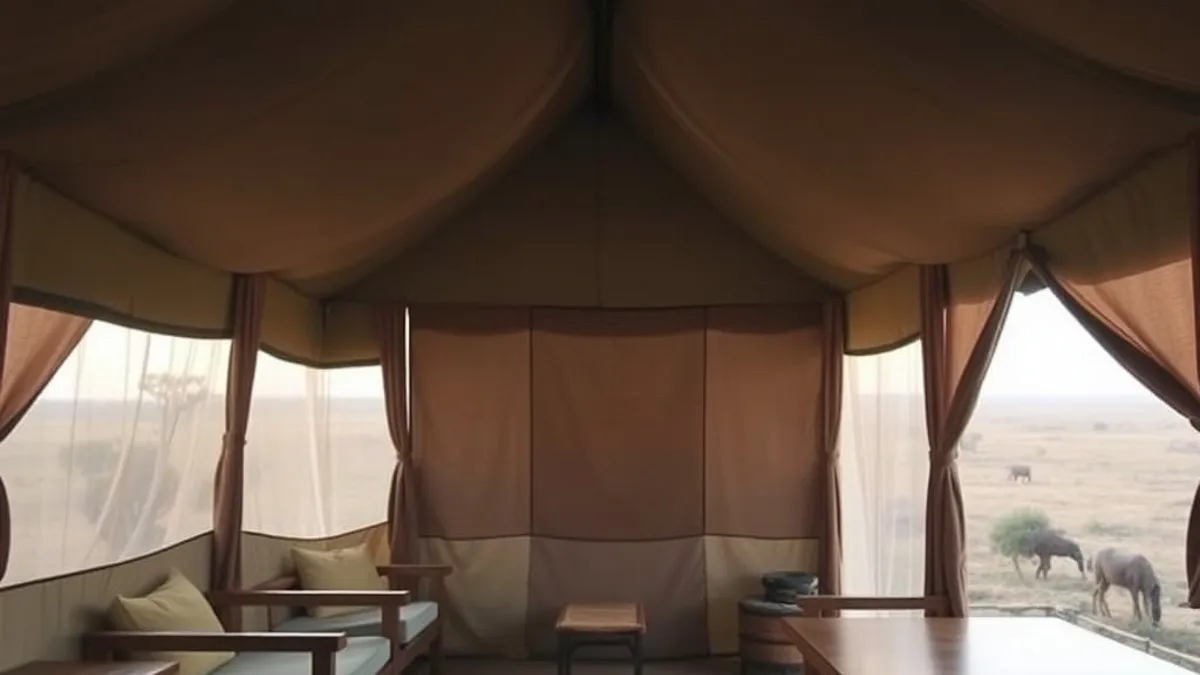
Camp Size, Location and Concession Access
Camp size changes the feel of a safari more than almost any other factor. Small camps of 8–12 tents tend to offer a quieter, more personal experience — you will likely share meals with your guides and hosts, and staff can tailor game drives to your interests. Large lodges with 100+ rooms trade that intimacy for facilities: swimming pools, spas, kids’ clubs and buffets that suit families and first-time safari-goers who want more structure and amenities.
Location matters just as much. A lodge inside a private concession plays by different rules than one inside a public national park. Private concessions typically permit night drives and off-road tracking, meaning guides can follow a leopard into thicker bush or spotlight nocturnal predators after dinner. In public parks, vehicles usually must stay on designated roads and return to camp by gate-closing time, which can limit sightings of elusive animals.
Before you commit, verify how you will actually arrive. Most fly-in itineraries use light aircraft with a checked luggage limit of around 15 kg in soft bags — hard-shell suitcases often will not fit in the hold. Ask the lodge or your operator for the transfer time from the nearest airstrip; a 10-minute game-viewing drive to camp is a very different arrival than a two-hour road transfer.
- Ask how many vehicles a concession allows at a sighting — some private areas cap this at two or three, while popular public park crossings can queue a dozen or more.
- Confirm whether the camp is water-based in flood seasons or reverts to game drives only, since some delta camps change their activity calendar with water levels.
- Request the airstrip-to-camp transfer mode in writing: vehicle, boat or light aircraft hop, as this affects both your schedule and your luggage handling.
- If traveling with children, check minimum age policies — many small tented camps restrict younger guests for safety around unfenced wildlife areas.
What the Nightly Rate Should Include
Most safari lodges quote their rates per person per night, and that figure usually bundles together the core of your stay: game drives, all meals, park or concession fees, and house drinks. Before you compare two lodges on price alone, confirm in writing that all of these are covered. A rate that looks cheaper can quickly lose its appeal once meals or park entry are billed separately.
It is just as important to know what sits outside the quoted rate. Even on a mid-range booking, the common extras can realistically add a meaningful three-figure sum per person per day, which is a significant shift in your total trip cost. Requesting a sample itemized bill from a recent guest stay is one of the simplest ways to get a realistic picture of the true daily spend.
Activities are another gray area. Standard morning and afternoon game drives are almost always included, but bush walks, night drives, boat safaris, and cultural village visits are frequently billed as extras — sometimes per activity, sometimes per hour. If a specific experience is the reason you picked that lodge, confirm whether it is included and how far in advance it needs to be scheduled.
Watch for these common add-ons when you tally your costs:
- Premium alcohol and cellar wines: house drinks are typically covered, but imported wines, champagnes, and top-shelf spirits usually appear on your tab — check the drinks list category, not just the word “drinks.”
- Laundry: many mid-range camps include a daily laundry service, while some charge per item; worth knowing if you are packing light for a fly-in itinerary.
- Gratuities: tipping guides and camp staff is customary at most lodges, and suggested amounts are usually listed in camp information — budget for it separately since it never comes out of the nightly rate.
- Internal light-aircraft flights: these are almost always quoted separately from the lodge rate, so confirm whether your package price includes the transfers between airstrips.
- Conservation or community levies: some private concessions add a small nightly levy on top of the rate that goes to local conservation projects — request the current amount when booking.
Booking Timelines and How to Lock In the Best Safari Lodge
Safari lodges, especially the small camps everyone wants, run on limited space — and peak season fills fast. Getting the lodge you actually shortlisted, rather than whatever is left over, comes down to timing your booking and choosing the right booking channel. Here is how to plan your timeline and lock in the best deal.
- Book peak-season lodges 9–12 months in advance. The best small camps in prime concessions typically host just 8–12 tents, so they sell out first — often to returning guests and repeat operators. If you want to travel during the dry season or catch the Great Migration river crossings, start reserving as soon as your dates are firm, roughly a year out.
- Use 2–3 months of lead time for green-season travel. Between November and March, availability is much wider and camps are motivated to fill beds. This is when rates are most negotiable, and you can often secure upgrades or discounts simply by asking — or by booking direct and comparing offers.
- Compare a safari specialist versus booking direct. Specialists often hold allotments at camps that show as sold out to the public, which can be the difference between getting your first choice and settling for your fourth. Direct bookings, on the other hand, may include long-stay discounts — for example, a reduced rate on the seventh night of a longer stay. It is worth getting quotes both ways before committing.
Whichever route you choose, get the confirmed dates, rate and inclusions in writing before paying a deposit. Popular camps occasionally hold space for returning guests, so if a specialist says a camp is full, ask them to check directly with the camp — allotments and waiting lists change more often than booking engines suggest. And if your first-choice dates are gone, ask about nearby camps in the same concession; a flexible date by a day or two can reopen availability entirely. Check current rates and cancellation terms with your operator, as these shift year to year.
Red Flags to Check Before You Pay a Deposit
A bargain nightly rate can be the most expensive mistake you make. Some lodges advertise prices that look like green-season steals, then add park fees, meals, or even game drives on top at checkout. Before you compare two camps on price alone, ask exactly what the rate covers — a quote that excludes park entry, meals, and activities can effectively double once everything is tallied up.
Photos of tents and plunge pools tell you almost nothing about the part of the safari that actually matters: the guiding. A mediocre room with an outstanding guide beats a luxury suite with a driver who sticks to the main roads and radio-chases every sighting. Read recent guest reviews specifically for comments on guide knowledge, vehicle condition, and how long sightings last before the vehicle moves on.
Finally, protect your money. Get the deposit and balance schedule in writing, including the exact date the final payment is due and what happens if the lodge cancels or your plans change. A reputable operator or lodge will answer these questions without hesitation.
- Ask who actually holds your money. If you book through an agent or specialist, check whether the company is bonded or carries financial failure insurance — this can protect your deposit if the operator collapses before your trip.
- Watch for vague payment terms. Phrases like “balance due on arrival” or requests to wire funds to a personal account rather than a business account are warning signs worth walking away from.
- Check how old the reviews are. A camp can change management, guides, or vehicles between seasons, so prioritize reviews from the last 12 months over a glowing average rating built on older stays.
Your Safari Lodge Checklist at a Glance
Choosing the right safari lodge comes down to sequence. Fix your budget band and wildlife priority first, then match the season — dry season from June to October for peak game viewing, or the November to March green season for better value and fewer vehicles. Only then start comparing camps on price.
When you do compare, weigh camp size, concession access, and exactly what the per-person nightly rate includes, because two lodges at similar prices can deliver very different safaris. Book 9–12 months ahead for peak season travel, verify inclusions and payment terms in writing, and you will land a lodge that fits your trip rather than one that merely looks good online. If this guide helped you plan, leave a comment or share it with a fellow traveler.